Physical Address:
Navi Mumbai, Maharashtra, India
Contact@navimumbaihub.com
Physical Address:
Navi Mumbai, Maharashtra, India
Contact@navimumbaihub.com

Reading Time: ~8 minutes
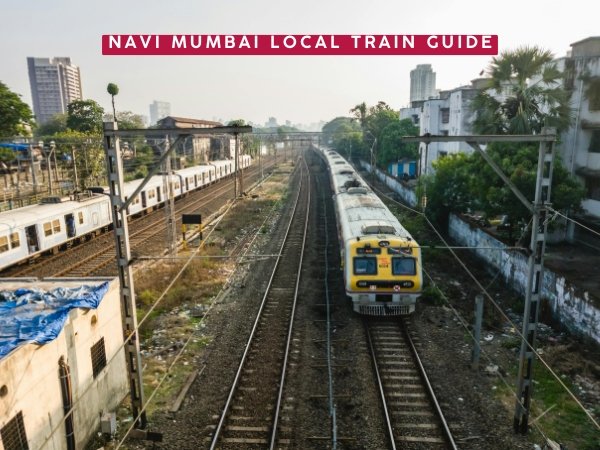
Every Navi Mumbai commuter’s day starts and ends with the local train — whether that’s a packed 8:15 AM Harbour Line service out of Kharghar or a quieter Trans-Harbour ride toward Thane. If you’ve just moved here, or you’re planning a visit and want to understand the rail map without getting lost in jargon, here’s the guide I wish someone had handed me when I started relying on these trains regularly.
Navi Mumbai’s local train network runs on two distinct lines, and mixing them up is the single most common mistake newcomers make.
This is the line most people mean when they say “local train to Mumbai” from Navi Mumbai. It runs from CSMT (Chhatrapati Shivaji Maharaj Terminus) in South Mumbai through Vashi, Sanpada, Juinagar, Nerul, Seawoods, Belapur, Kharghar, and down to Panvel. It’s the backbone connecting Navi Mumbai directly to the island city.
Key stations on the Harbour Line (Navi Mumbai side):
This is the line that connects Thane to Panvel, running through the more industrial/commercial belt of Navi Mumbai — Airoli, Ghansoli, Kopar Khairane, Turbhe, and Vashi (where it meets the Harbour Line). If your daily commute involves Thane rather than South Mumbai directly, this is your line.
Key stations on the Trans-Harbour Line:
The two lines physically overlap between Vashi and Panvel — meaning trains from both Thane and CSMT eventually converge on the same tracks heading south. This is exactly why a Kharghar or Panvel-bound train can originate from either CSMT or Thane, and why checking your train’s origin matters as much as its destination.
This depends entirely on where you’re headed:
| If you’re going to… | Take the… |
|---|---|
| South Mumbai (CST, Dadar, Byculla) | Harbour Line |
| Thane | Trans-Harbour Line |
| Within Navi Mumbai only (Vashi to Kharghar, etc.) | Either — both serve these stations |
| Airoli, Ghansoli, Kopar Khairane, Rabale | Trans-Harbour Line specifically |
If your commute is entirely within Navi Mumbai’s core nodes — say, Vashi to Kharghar — you genuinely don’t need to think about which line; both stop at all the same core stations between Vashi and Panvel.
Like any Mumbai-region local train, timing matters enormously:
Ladies’ compartments run on both lines and are worth using during peak hours — they’re consistently less crowded than general compartments during the worst rush windows.
Both lines offer first and second class. For a daily commuter doing Kharghar to CSMT or similar, first class monthly passes cost significantly more but buy genuine comfort during peak hours — something worth considering if your commute exceeds 45 minutes each way. For occasional or off-peak travel, second class is perfectly manageable.
This is a question I get asked often, especially from people weighing whether to rely on rail or road for a South Mumbai commute. The honest answer: it depends on your exact route.
For CSMT, Fort, or Churchgate-area offices, the Harbour Line is usually faster and more predictable than road traffic, even accounting for crowding. But if your office is in BKC or the Eastern Freeway corridor, Atal Setu now offers a genuinely competitive door-to-door time, especially outside the morning/evening peak windows when the bridge itself gets congested.
Many commuters I know use a hybrid approach — train for the unpredictable South Mumbai stretch, cab or bike for the last mile.
The existing Belapur–Pendhar Navi Mumbai Metro line intersects with the Harbour Line at CBD Belapur, giving residents of areas like Kharghar and Taloja a rail-to-metro interchange option that didn’t exist a few years ago. If you’re commuting from a metro-served sector to a Harbour Line station, this combination cuts significantly into what used to require an auto-rickshaw leg.
A few things that aren’t obvious until you’ve actually ridden these trains regularly:
With NMIA’s international operations now beginning (see our coverage of the Abu Dhabi flight launch), expect increased pressure on Panvel station specifically, as it becomes a more significant interchange point for airport-bound travelers arriving by rail. If you’re planning a rail-to-airport connection, budget extra time at Panvel during the initial ramp-up period while the station adjusts to higher footfall.
The Harbour Line and Trans-Harbour Line together are genuinely one of Navi Mumbai’s underrated advantages — a resident of Kharghar can reach CSMT, Thane, or anywhere in between without touching a car, something residents of many other Mumbai-adjacent cities can’t say. It’s not glamorous, and peak hours are genuinely tough, but understanding which line to take and when saves real time every single day.
Read Next: Atal Setu Bridge: Route, Distance & Toll Guide (2026)
Explore More NM: Kharghar Area Guide | Vashi Area Guide | Navi Mumbai Metro Guide