Physical Address:
Navi Mumbai, Maharashtra, India
Contact@navimumbaihub.com
Physical Address:
Navi Mumbai, Maharashtra, India
Contact@navimumbaihub.com

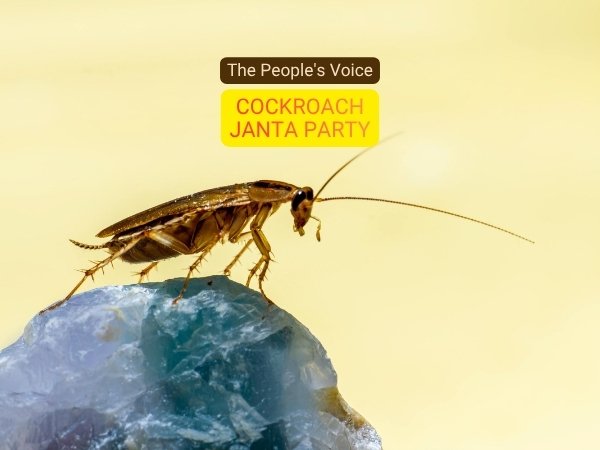
Let that sink in for a moment.
19.1 million Instagram followers. In 5 days. (source:Instagram)
BJP’s official Instagram handle — the ruling party of 1.4 billion people, with unlimited resources, a professional social media army and over a decade of digital dominance — has approximately 8.7 million followers.
A satirical party started by a student in Boston, with a Google Form, 52 posts and a party anthem — has just blown past them.
The Cockroach Janta Party (CJP) is the most extraordinary social media phenomenon in Indian political history. And that sentence raises the most important question nobody seems to be asking right now.
What happens next?
On May 15, 2026, Chief Justice of India Surya Kant was hearing a case in the Supreme Court. In open court, he said:
“There are youngsters like cockroaches, who don’t get any employment or have any place in the profession. Some of them become media, some of them become social media, RTI activists and other activists, and they start attacking everyone.”
The outrage was immediate. The comparison of unemployed Indian youth — 300 million strong, many educated, many genuinely struggling in a difficult job market — to cockroaches and parasites was not just offensive. It was a window into how the establishment views the generation it has failed to adequately employ.
The next day, Abhijeet Dipke — a 30-year-old Indian student studying public relations at Boston University, and formerly a social media strategist for the Aam Aadmi Party — posted on X:
“What if all cockroaches come together?”
What followed broke every record in Indian social media history:
Day 1: Website launched
Day 2: 3 million Instagram followers
Day 3: 6 million followers —
surpasses AAP
Day 4: 8.4 million —
approaching BJP
Day 4 (evening): 10.8 million —
BEATS BJP’s official handle
Members registered: 350,000+
Opposition MP sign-ups: Multiple
International media coverage:
Al Jazeera, BBC, Reuters
The Chief Justice subsequently issued a clarification. He said he was specifically criticising people who entered the legal profession with fake degrees — not the unemployed youth generally. Make of that what you will.
The cockroaches had already assembled.
Here is what 10.8 million followers in 4 days actually means in context:
| Account | Followers (Instagram) | Time to Build |
|---|---|---|
| CJP | 10.8 million | 4 days |
| BJP Official | ~8.7 million | 10+ years |
| AAP | ~4 million | 10+ years |
| Congress | ~3 million | 10+ years |
| Rahul Gandhi | ~20 million | Years |
CJP surpassed AAP on Instagram and moved within touching distance of BJP’s social media numbers, turning what began as a meme movement into one of the biggest political talking points in India this week.
The BJP has spent crores on digital advertising. They have professional teams, influencer tie-ups and the advantage of being in government. A satirical party with a Google Form beat them in four days.
This is not just about CJP. This is a seismic signal about the anger, frustration and disconnection that India’s youth feel from every existing political party.
The energy is real. The anger is legitimate. The numbers are historic.
But this is where the honest conversation has to begin. Because beyond the numbers, some things deserve serious scrutiny.
Read CJP’s official eligibility criteria for membership. The party says its ideal member is:
The party officially describes itself as “Secular, Socialist, Democratic and Lazy.”
This started as satire — as a deliberate, ironic reclaiming of the insults thrown at India’s youth. And as satire, it is brilliant.
But here is the uncomfortable truth: when a movement’s identity is built around celebrating unemployment, laziness and permanent screen addiction — even ironically — what message does that send to the 10.8 million people who just joined?
There is a difference between reclaiming an insult and institutionalising the behaviour behind it.
The CJI called youth cockroaches for being unemployed and online. CJP responded by making “unemployed and online” the official qualification to join.
When satire becomes structure, irony becomes instruction.
Abhijeet Dipke is currently in the United States — first at Boston University, then fielding international media calls from Chicago — building a movement for the unemployed youth of India from thousands of kilometres away.
Dipke told Al Jazeera from Chicago: “Those in power think citizens are cockroaches and parasites. They should know that cockroaches breed in rotten places. That’s what India is today.”
Powerful words. Genuinely powerful.
But the 10.8 million people responding to his call are in Patna, Nagpur, Lucknow, Mumbai, Pune. They are living the unemployment crisis he is describing from an American city. They will face the consequences of whatever this movement becomes — or fails to become.
Abhijeet Dipke — by all accounts a smart, articulate, passionate young man — is studying public relations in America. He is building his own career and resume abroad while mobilising India’s frustrated youth at home.
This is not an attack on him personally. It is a question about the structural credibility of the movement he leads.
You cannot lead a movement about unemployment from a position of comfortable international student life.
And here is the detail that most coverage has buried: Abhijeet Dipke is a former social media strategist for the Aam Aadmi Party.
That single fact reframes everything.
Dipke’s background in AAP is not incidental. It is the key to understanding exactly what CJP is and where it is headed.
Because we have seen this movie before.
2011-2012: India Against Corruption movement. Viral. Emotional. Millions joined. Anna Hazare. Arvind Kejriwal. Real anger, real energy, real numbers.
2013: AAP formed. Swept Delhi. The movement became a party.
2015: Massive Delhi mandate. 67 out of 70 seats. Unprecedented.
2020: Another Delhi victory. Governing Punjab. National ambitions.
2024-2026: Party leaders arrested on corruption charges. The movement that was born out of anti-corruption outrage ended with its leaders in jail for corruption.
Rise. Promise. Power. Compromise. Fall.
Reports indicate that supporters of the Cockroach Janta Party were already considering contesting the upcoming Bankipur Assembly by-election in Bihar — and this is a party that is four days old. (Source – TOI, News18)
Four days from satirical Instagram page to electoral ambitions.
The speed is breathtaking. It is also deeply familiar.
Viral outrage
↓
Online movement
↓
Real party
↓
Election wins
↓
Power dynamics
↓
Compromise
↓
Same old story
↓
Unemployment still there
When CJP eventually wins a ward election, a by-election, maybe a state seat — and the founder returns from America to lead it — what happens to the agenda?
The same thing that happens to every agenda when it meets the reality of governance.
India has a well-established pattern of online movements that burned bright and disappeared completely.
Every few months a new hashtag captures the national imagination. Millions of posts. Television debates. Celebrity endorsements. Politicians react.
And then the algorithm moves on. And nothing changes.
The difference between a movement and a moment is sustained, unglamorous, offline work.
Real political change in India — the kind that actually affects employment, infrastructure, governance — requires:
Street presence. You cannot file RTIs from your couch. You cannot attend gram sabha meetings through Instagram reels. You cannot hold an MLA accountable by posting a meme.
Sustained effort over years. The energy that generates 10 million followers in 4 days is spectacular. But it is not the same energy that shows up every Tuesday at the municipal corporation office for three years asking the same question about a broken road.
Accountability structures. Who is CJP accountable to right now? Essentially one person in Boston with a Google Form and a viral Instagram account. When the money comes in — and it will — who audits it?
Courage beyond the keyboard. The history of movements that actually changed things is written in real sacrifice. Not viral moments — real consequences. Legal risk. Physical risk. Years of grinding work with no likes, no reels, no algorithm reward.
To be completely fair — the potential here is real and it should not be dismissed.
Going forward, Dipke wants the platform to mobilise youth, encourage civic engagement, and even guide supporters toward activism through steps such as filing RTIs to hold governments accountable.
If that happens. If CJP channels 10.8 million followers into genuinely filing RTIs. Into voter registration drives. Into showing up at local government meetings. Into running credible candidates for ward-level elections where actual policy change happens at street level.
If the founder returns to India and leads from the ground instead of from Boston.
If the movement graduates from satire to substance without losing the energy that made it powerful.
Then it is something genuinely new and genuinely valuable.
But if it follows the AAP arc — and the early biographical connection to AAP makes that arc all the more likely — then four years from now, the same young people with CJP profile pictures will be asking the same questions they are asking today.
Why are we still unemployed? Why has nothing changed? What happened to the movement that was supposed to be different?
10.8 million followers is a staggering achievement.
But here is the number that actually matters for India’s youth.
India’s unemployment rate among educated youth remains stubbornly high. Millions of young Indians with degrees cannot find work. The gap between aspiration and opportunity grows wider every year.
No Instagram follower count changes that number.
No viral moment fixes a broken hiring system.
No party anthem creates jobs.
The CJI was wrong to call India’s youth cockroaches. Completely, inexcusably wrong.
But the best response to that insult is not to go viral.
It is to prove — through real action, real presence and the real work of civic engagement — that you are something far more powerful than the people in power give you credit for.
India does not need another movement that peaks on social media and fades when the algorithm moves on.
It needs young people willing to do the boring, difficult, unglamorous work of showing up.
The cockroaches who changed India throughout history were not the ones who trended.
They were the ones who never stopped.
What do you think? Is CJP a genuine movement or India’s most sophisticated viral moment? Comment below.
Opinion piece. Views are the author’s own. Last Updated: May 21, 2026 — numbers updated as the story develops.