Physical Address:
Navi Mumbai, Maharashtra, India
Contact@navimumbaihub.com
Physical Address:
Navi Mumbai, Maharashtra, India
Contact@navimumbaihub.com

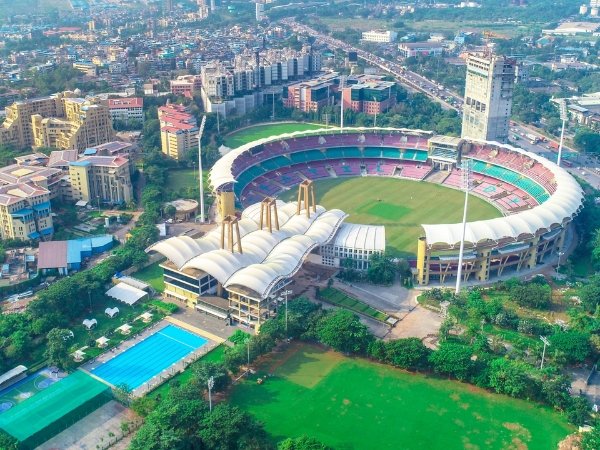
If you live anywhere between Kharghar and Vashi, DY Patil Stadium traffic is something you plan around every time there’s a big match or concert — the Sion-Panvel Highway backs up for kilometres on event nights, and cycling that stretch on a match evening is a mistake I’ve made exactly once. This guide covers what actually helps when you’re heading to an event there, not just a generic “how to reach” writeup.
DY Patil Stadium, formally the Dr. D. Y. Patil Sports Stadium, sits inside the DY Patil Sports Academy campus in Sector 7, Nerul. It was inaugurated on 4 March 2008 and designed by architect Hafeez Contractor, with a distinctive cantilevered membrane roof that keeps every seat free of pillar obstruction — a genuinely unusual feature for a stadium of its size in India. Seating capacity is generally quoted between roughly 45,000 and 55,000 depending on the configuration for a given event, making it one of the largest cricket grounds in the country. It hosted the IPL final in both 2008 and 2010, has been used by the BCCI for international women’s matches, and has been a regular venue for Mumbai City FC in the Indian Super League. It also hosted matches during the FIFA U-17 World Cup, so it’s genuinely a multi-sport venue, not just a cricket ground that occasionally does other things.
There are three realistic ways in, and which one makes sense depends heavily on where you’re coming from and how close to event time you’re travelling.
By local train: Nerul railway station on the Harbour Line is the nearest station, roughly two to three kilometres from the stadium. Autos run this stretch constantly on event days, though fares climb once a match lets out and the post-event crowd all wants a ride at the same time.
By metro: If you’re coming via the Navi Mumbai Metro, the closest stations feed into the Belapur-Nerul stretch, from where it’s a short auto ride to the stadium gates. This tends to be a more predictable option than driving during peak event traffic, since the metro itself isn’t affected by the road congestion building up around the venue.
By road: Anyone driving in from Kharghar, Panvel, or via Atal Setu will hit the Sion-Panvel Highway directly, which is the main approach road to the stadium from the south and east. This is also the same corridor most local train commuters use as a backup route when the Harbour Line itself is running slow, so it carries a lot of everyday traffic even without an event adding to it.
Stadium parking fills up fast on marquee events, IPL nights especially, and a few habits consistently help regardless of which gate you’re headed to.
The worst congestion isn’t during the event itself — it’s the thirty to forty-five minutes right after it ends, when the entire crowd tries to exit through the same two or three approach roads simultaneously. If you can manage it, wait fifteen to twenty minutes after the final whistle or the last song before heading to your vehicle. It sounds counterintuitive when you just want to get home, but it consistently beats sitting in gridlock for the same amount of time or longer, and you can usually find a spot to grab water or a snack nearby while the initial exit wave clears.
For anyone commuting through this corridor on a normal, non-event day, the highway itself is one of the better-maintained stretches connecting Nerul to the rest of Navi Mumbai — it’s part of why this pocket of Nerul and Seawoods has grown into a genuine entertainment and events hub over the years, rather than staying a purely residential node the way some other parts of the city have.
If you’re using a cab or bike-taxi service to get to an event, avoid requesting a pickup directly outside the main gates once the event has ended — driver access to those points is often restricted by police barricading during high-attendance matches or concerts. Walking ten to fifteen minutes away from the immediate stadium perimeter before booking your ride usually gets you matched faster and avoids the worst of the driver congestion right at the gates. The same logic applies in reverse for drop-off before an event — ask your driver to drop you a short walk out rather than trying to nose into the immediate approach road, which is often at a standstill in the final half hour before gates close.
Seawoods Grand Central Mall and the broader Nerul-Seawoods area are a short drive from the stadium, making it easy to grab food or simply wait out post-event traffic somewhere air-conditioned instead of sitting in a parking queue for an hour. It’s also a reasonable option if you’re arriving early and want to avoid the pre-event crowd building up right around the stadium gates.
How far is DY Patil Stadium from Kharghar?
Roughly twelve to fifteen kilometres via the Sion-Panvel Highway, typically thirty to forty minutes outside event traffic, considerably longer during one.
Is there a metro station right at the stadium?
Not directly at the gate — the nearest metro and rail connectivity is through the Belapur-Nerul stretch, followed by a short auto ride to the stadium itself.
What’s the best time to leave after an event to avoid traffic?
Waiting fifteen to twenty minutes after the event ends before heading to your vehicle consistently beats trying to leave immediately with everyone else.
What is the seating capacity of DY Patil Stadium?
Generally quoted between roughly 45,000 and 55,000 depending on the event configuration, making it one of the largest stadiums in India.
Does DY Patil Stadium host anything besides cricket?
Yes — it’s a genuine multi-sport and events venue, having hosted Indian Super League football matches, FIFA U-17 World Cup fixtures, and large concerts alongside its cricket history.