Physical Address:
Navi Mumbai, Maharashtra, India
Contact@navimumbaihub.com
Physical Address:
Navi Mumbai, Maharashtra, India
Contact@navimumbaihub.com

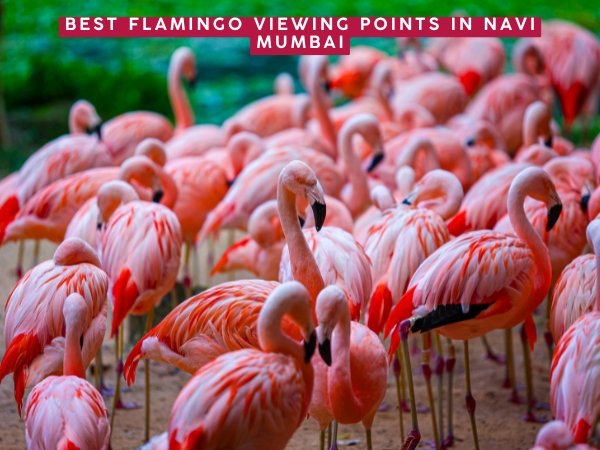
Quick answer: Navi Mumbai has four distinct flamingo-viewing spots, not one: Seawoods Flamingo Point (near NRI Complex, Palm Beach Road), Karave Flamingo Point (off Palm Beach Road, near Kharave village), the TS Chanakya Birding Point (Nerul), and the wider Thane Creek Flamingo Sanctuary (Airoli side). Season runs November to May, with January-April as peak. Best viewing is 2 hours either side of high tide, ideally 6-10 AM.
Located near the NRI Complex on Palm Beach Road, behind Delhi Public School, Seawoods. This is the most accessible and well-known point, with a dedicated watch tower and viewing platform. Best for first-time visitors or families — parking and access are easier here than at the more remote spots.
Best time: Early morning (7-9 AM) or late afternoon (4-6 PM) for both bird activity and light quality.
A more raw, less developed wetland near Kharave village, just off Palm Beach Road. Known for striking sunset views and diverse birdlife beyond just flamingos. Popular with photographers specifically for this reason.
Good to know before you go: Parking is genuinely limited — space for only 10-15 cars — and access roads are narrow. Arriving by two-wheeler is easier than by car, and weekday mornings avoid the worst crowding.
Best time: 6:30-9:00 AM or 4:30-6:00 PM.
Located near the TS Chanakya campus in Nerul, this spot sees large flocks feeding directly on the mudflats. Less crowded than Seawoods, and a solid alternative if you’ve already done the more popular points.
The formal, protected version of all this — a Ramsar wetland site spanning the creek between Airoli, Vashi, and beyond. This is where organized boat safaris and guided birdwatching walks typically operate from, rather than a casual roadside stop. If you want more than a viewing point — an actual guided experience through mangroves — this is the one to book, not just show up at.
Flamingos are present in Navi Mumbai roughly November through May, with the largest, most reliable flocks between January and April. Outside this window, sightings become sparse to nonexistent as birds migrate elsewhere.
Within the season, the single biggest factor isn’t the calendar — it’s the tide. Flamingos feed on mudflats exposed as water recedes, so the two hours before and after high tide consistently produce the best sightings, regardless of time of day. If you can only optimize for one thing, optimize for tide timing over sunrise/sunset.
All four points sit along or near Palm Beach Road, making this the natural corridor to plan around regardless of which specific point you choose. Local train to Nerul, Seawoods-Darave, or Vashi stations gets you close, with autos or short cab rides covering the last mile — none of these points are walkable from the station directly.
It’s worth understanding the actual ecosystem behind the spectacle, since it shapes how you should approach these visits. The flamingos arriving each winter are primarily migratory Lesser and Greater Flamingos, drawn by the shallow, nutrient-rich mudflats along Thane Creek — an estuarine system where fresh and saltwater mix, producing exactly the algae and small invertebrates flamingos feed on. This is also why tide timing matters so much: as water recedes, it exposes feeding grounds that are submerged at high tide, concentrating birds in visible, accessible patches rather than spreading them across the wider creek.
The creek’s mangrove belt plays a supporting role too, acting as a buffer that keeps these mudflats relatively undisturbed compared to open coastline. That’s part of why this specific stretch — rather than other parts of the Mumbai coastline — has become the reliable flamingo corridor it is today.
If photography is your main reason for visiting, a few things matter more than which point you pick:
| If you want… | Go to |
|---|---|
| Easiest access, good for families | Seawoods Flamingo Point |
| Best photography, don’t mind limited parking | Karave Flamingo Point |
| Fewer crowds | TS Chanakya Point (Nerul) |
| A guided, structured experience | Thane Creek Flamingo Sanctuary (boat/walk) |
Flamingo season is one of the few times Navi Mumbai’s wetlands get real attention — pair this with our broader flamingo overview for background on the phenomenon itself, and check the boat ride guide if you want to combine a Nerul Jetty outing with a nearby viewing point. If you’re coming from the Airoli side, our Airoli area guide covers the sanctuary’s connectivity in more detail.
What is the best time to see flamingos in Navi Mumbai?
January to April, within two hours of high tide, ideally between 6 and 10 AM.
Which flamingo point has the best parking?
Seawoods Flamingo Point — Karave has space for only 10-15 vehicles and narrow access roads.
Are flamingos still in Navi Mumbai right now?
Season runs November through May. Outside these months, sightings drop off significantly as the birds migrate.
Do I need to book anything to see the flamingos?
No booking is needed for Seawoods, Karave, or the TS Chanakya point — they’re open, publicly accessible viewing spots. Guided boat safaris through the Thane Creek Flamingo Sanctuary are the exception and typically do require booking in advance.
What kind of flamingos come to Navi Mumbai?
Primarily Lesser and Greater Flamingos, migrating to feed on the algae and invertebrates found in Thane Creek’s shallow, nutrient-rich mudflats.
Read Next: Flamingo Navi Mumbai Overview | Boat Ride Navi Mumbai
Explore More NM: Airoli Area Guide | Nerul & Seawoods Area Guide | Things To Do This Weekend