Physical Address:
Navi Mumbai, Maharashtra, India
Contact@navimumbaihub.com
Physical Address:
Navi Mumbai, Maharashtra, India
Contact@navimumbaihub.com

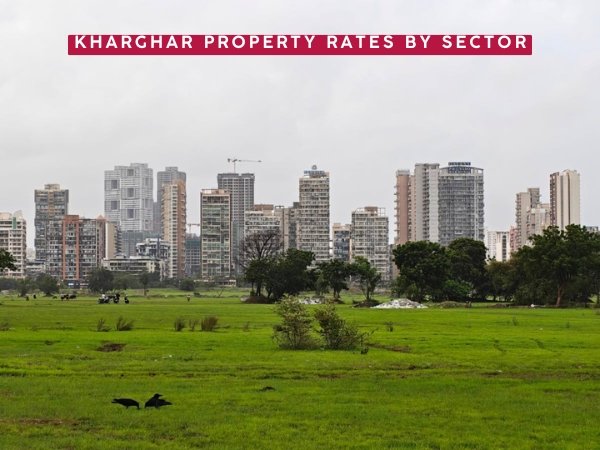
Quick answer: Kharghar’s average rate sits around ₹17,500-17,750/sqft as of 2026, but that single number hides a huge sector-by-sector spread — from roughly ₹15,700/sqft in Sector 13 to over ₹34,000/sqft in premium pockets like Sector 23. Location relative to Central Park, the Golf Course, and metro connectivity drives most of the gap. [CONFIRM: rates below are sourced from 99acres’ latest published data — treat as a directional guide, always verify current listings before transacting.]
| Sector | Avg. Rate (₹/sqft) | YoY Change |
|---|---|---|
| Sector 13 | ₹15,700 | 0.0% |
| Sector 10 | ₹17,150 | -0.6% |
| Sector 21 | ₹17,050 | +4.9% |
| Sector 35G | ₹17,650 | +6.0% |
| Sector 19 | ₹18,750 | +5.0% |
| Sector 18 | ₹19,350 | +13.8% |
| Sector 20 | ₹19,250 | +11.9% |
| Sector 15 | ₹19,950 | +4.7% |
| Sector 11 | ₹19,950 | +11.8% |
| Sector 12 | ₹22,300 | +17.1% |
| Sector 23 | ₹34,550 | +16.1% |
| Sector 5 | ₹35,650 | — |
Kharghar-wide average: ~₹17,500-17,750/sqft, having moved roughly 3.8% in the last year, 17.9% over three years, and 35.5% over ten years.
Kharghar is not a single market — it’s several overlapping ones, and quoting one average rate to a buyer is close to useless. Here’s how the sectors actually group:
Premium core (Sectors 5, 12, 20, 23): These sit closest to Central Park, ISKCON, and the Golf Course, and command the steepest premiums. Sector 20 specifically is the aspirational heart of Kharghar — a 3 BHK here starts around ₹1.5 crore, and as scarcity sets in for ready-to-move luxury inventory, resale is expected to keep climbing faster than the Kharghar average.
Established mid-tier (Sectors 10, 11, 15, 18, 19, 21): Solid, walkable, well-serviced sectors without the premium-core price tag. This is where most end-use buyers land — good infrastructure, mature societies, without paying for the Central Park proximity specifically.
Value/Upper Kharghar (Sectors 30-36): Not in the table above because they trade at a different, lower band entirely, but this is the fastest-appreciating tier. Metro-connected via the Pendhar terminus, still affordable relative to central Kharghar, and the clearest entry point for long-term investors rather than immediate end-use buyers.
Three infrastructure factors show up repeatedly in why certain sectors are pulling ahead:
If you’re comparing Kharghar against other Navi Mumbai options: Kharghar’s appreciation curve has slowed from its 2020-2022 sprint — recent YoY numbers in the 2-4% range look modest compared to faster-moving pockets like Upper Kharghar or the airport-driven Panvel market. What you’re buying in central Kharghar today is stability and infrastructure maturity, not the sharpest growth curve. That’s a legitimate trade-off, not a weakness — but it should shape which sector you target based on whether you’re an end-user or an investor.
Most lenders treat Kharghar favorably given its established infrastructure and CIDCO-planned status, but a few practical points matter when budgeting: banks typically finance up to 80% of the property value for salaried buyers, meaning a ₹1 crore 2 BHK still needs roughly ₹20 lakh as upfront down payment plus registration and stamp duty costs, which in Maharashtra run around 6-7% of the transaction value combined. For premium-core sectors where rates cross ₹30,000/sqft, some lenders apply stricter loan-to-value ratios given the smaller comparable-sales pool, so it’s worth checking with your specific bank before assuming the standard 80% financing applies uniformly across every sector.
Kharghar’s rental yields typically run in the 2.5-3.5% range annually, varying by sector and configuration — broadly in line with Navi Mumbai’s wider market, though slightly softer than newer, metro-adjacent nodes still building their rental base. Premium-core sectors (5, 12, 20, 23) tend to see lower yields in percentage terms despite higher absolute rents, simply because the purchase price has risen faster than rent has kept pace. If pure rental yield is your primary goal rather than capital appreciation, Upper Kharghar’s lower entry price relative to its rental demand from young professionals and metro commuters often produces a better yield story than the premium core.
Kharghar has attracted a mix of established regional developers and larger national players, with newer supply concentrated most heavily in the Upper Kharghar sectors given available land. When evaluating any specific project, checking MahaRERA registration status and the developer’s delivery track record on prior Kharghar projects matters more than the brand name alone — several well-marketed projects in this node have faced delivery delays in recent years, which is a genuine risk factor buyers should weigh against the appreciation numbers above.
For the lifestyle side of these sectors — not just the price tag — our Kharghar Area Guide covers the Central Park, ISKCON, and food scene context that shapes why these premiums exist in the first place. If you’re weighing Kharghar against a metro-connected alternative, see how it stacks up in our Navi Mumbai Metro Guide, and for a city-level comparison, our Navi Mumbai vs Thane piece is a useful next read.
What is the average property rate in Kharghar in 2026?
Roughly ₹17,500-17,750 per sqft citywide, though individual sectors range from about ₹15,700 to over ₹34,000/sqft.
Which Kharghar sector offers the best value for investment?
Kharghar Sectors 30-36 is the fastest-appreciating, metro-connected, and still comparatively affordable tier — the clearest pick for investors over immediate end-users.
Is Kharghar still worth buying into in 2026?
Yes for stability and infrastructure maturity, but temper expectations on appreciation — the sharpest gains from 2020-2022 have already priced in for the central, established sectors.
What rental yield can I expect in Kharghar?
Typically 2.5-3.5% annually, with Upper Kharghar sectors often outperforming the premium core on a pure yield basis, given lower entry prices relative to rental demand.
How much down payment do I need for a Kharghar flat?
With standard 80% financing, expect roughly 20% of the property value as down payment, plus 6-7% for stamp duty and registration in Maharashtra.
Read Next: Kharghar Area Guide | Navi Mumbai Metro Guide
Explore More NM: Panvel Area Guide | Ulwe Area Guide | Navi Mumbai vs Thane